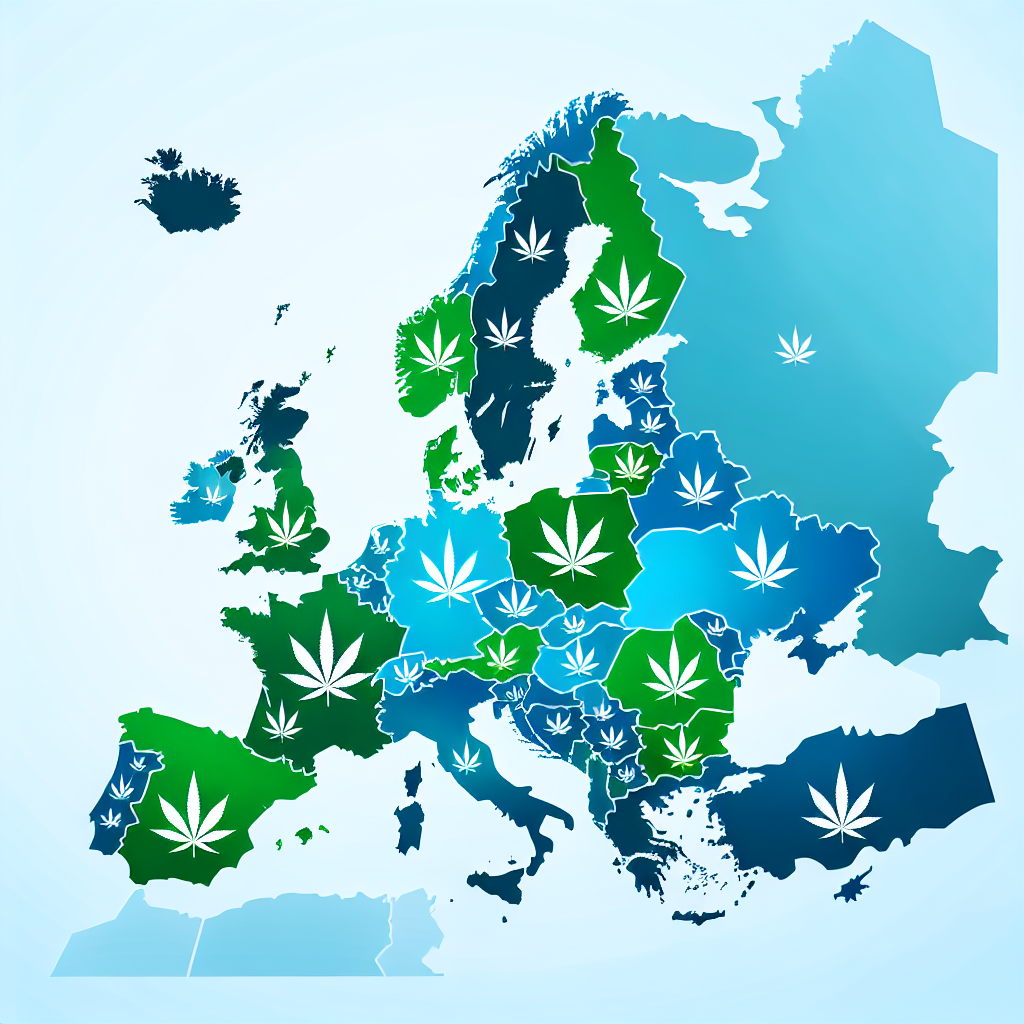
Europe is in the middle of a cannabis revolution. After decades of strict prohibition, country after country is reconsidering its approach — driven by changing public opinion, evidence from North America’s legalization experiments, and growing recognition of cannabis’s medical benefits.
Here is a comprehensive look at where European countries stand on cannabis legalization in 2025.
Germany: The Game Changer
April 2024 marked a historic moment: Germany became the first major European economy to partially legalize recreational cannabis. Under the Cannabis Act (CanG), German adults (18+) can now:
- Possess up to 25g in public and 50g at home
- Grow up to 3 plants for personal use
- Join Cannabis Social Clubs — non-profit associations where members can collectively cultivate and receive cannabis
Commercial retail sales remain prohibited for now, but Germany’s legalization has sent shockwaves through European politics and is expected to accelerate reform across the continent.
Malta: The First Mover
Malta was the first EU member state to legalize personal cannabis use, back in December 2021. Maltese adults can possess up to 7g in public, grow up to 4 plants at home, and join registered non-profit cannabis associations.
Netherlands: The Tolerance Paradox
The Netherlands has famously operated under a gedoogbeleid (tolerance policy) for decades. In 2025, a pilot program allowing licensed commercial cultivation for coffeeshops is in full operation in 10 municipalities, moving the country closer to full regulated legalization.
Luxembourg
Luxembourg legalized home cultivation (up to 4 plants) and possession of up to 3g in public for adults in 2023. The country is seen as a progressive voice pushing for EU-wide harmonization.
Czech Republic
In 2024, the Czech Republic passed legislation allowing adults to possess up to 10g of cannabis in public and grow up to 3 plants at home.
Spain: The Social Club Model
Spain has an interesting quasi-legal system centered around Cannabis Social Clubs — private, members-only associations that collectively grow and distribute cannabis to members. These clubs operate particularly in Catalonia and the Basque Country and serve hundreds of thousands of members.
Switzerland
Switzerland launched regulated pilot programs for recreational cannabis sales in several cities in 2023-2024. Full legalization is under active parliamentary discussion.
What Does This Mean for Cannabis Users in Europe?
- Know your local laws — regulations differ dramatically between countries
- Medical cannabis is increasingly accessible across most of Europe
- Germany’s legalization is a catalyst — expect more countries to follow
- Social clubs are spreading as a model in countries where retail is still prohibited
- Cross-border travel with cannabis remains illegal even between countries where it is legal domestically
The Future
Most analysts expect the EU to face increasing pressure to harmonize cannabis policy as more member states legalize. Germany’s regulated market is projected to generate billions in tax revenue and eliminate the illegal market over time.
WeedVersus will keep this article updated as Europe’s cannabis landscape continues to evolve throughout 2025 and beyond.